



大家好,很高兴再次与大家见面,我是你们的老朋友全栈君。
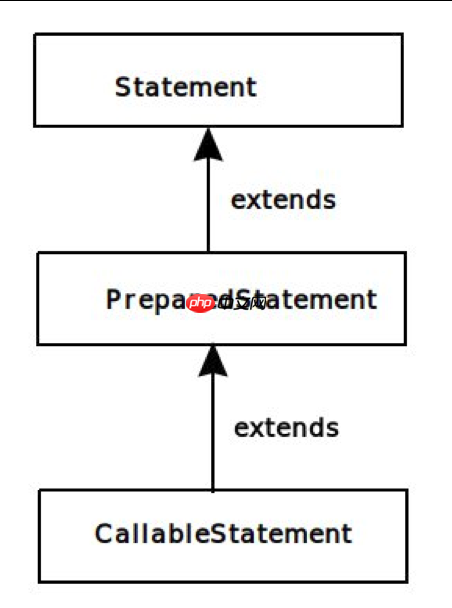
Java PreparedStatement与Statement类似,是Java JDBC Framework的一部分。它用于对数据库执行CRUD操作。PreparedStatement扩展了Statement接口。由于支持参数化查询,PreparedStatement被认为更为安全,并且可以防止SQL注入攻击。我们可以通过调用Connection的prepareStatement(String query)方法来获取PreparedStatement的实例,如下所示:
// 方法:public PreparedStatement prepareStatement(String query) throws SQLException {}
// 使用:Connection con = DriverManager.getConnection("jdbc:mysql://localhost:3306/customerdb", "root", "root");
PreparedStatement ps = con.prepareStatement("select id, firstname, lastname, email, birthdate from tblcustomer");
PreparedStatement的优势:
PreparedStatement不仅可以用于参数化查询,还可以用于普通查询。其查询性能优于Statement。PreparedStatement的实例可以被重复使用,以执行具有不同参数的同一查询。此外,PreparedStatement可以保护应用程序免受SQL注入攻击。
立即学习“Java免费学习笔记(深入)”;
Java PreparedStatement层次结构
PreparedStatement方法:
我们可以将方法分为不同的类别。
-
执行查询:
-
ResultSet executeQuery():此方法用于通过PreparedStatement对象执行读取操作,返回ResultSet实例以获取数据。 -
int executeUpdate():此方法用于执行插入、删除和更新查询,返回一个整数值,表示受查询影响的数据库行数。
-
-
将参数值传递给查询:
- 所有以下方法都有两个参数。第一个参数是参数索引,第二个参数是参数值。
-
void setInt(int parameterIndex, int value):将Integer值设置为指定的参数索引。 -
void setShort(int parameterIndex, short value):将short值设置为指定的参数索引。 -
void setLong(int parameterIndex, long value):将Long值设置为指定的参数索引。 -
void setFloat(int parameterIndex, float value):将Float值设置为指定的参数索引。 -
void setDouble(int parameterIndex, double value):将Double值设置为指定的参数索引。 -
void setBigDecimal(int parameterIndex, BigDecimal value):将BigDecimal值设置为指定的参数索引。 -
void setString(int parameterIndex, String value):将String值设置为指定的参数索引。 -
void setDate(int parameterIndex, Date value):将Date值设置为指定的参数索引。
注意:参数索引值从1开始,所有这些方法都会抛出SQLException。
Java PreparedStatement示例:
我们将使用MySQL数据库来演示PreparedStatement的使用。使用以下DB脚本创建数据库、表和示例数据:
create database customerdb;
use customerdb;
create table tblcustomer(
    id integer AUTO_INCREMENT primary key,
    firstname varchar(32),
    lastname varchar(32),
    email varchar(32),
    birthdate datetime);
insert into tblcustomer (id,firstname,lastname,email,birthdate) values(1,'Ricky','Smith','ricky@google.com','2001-12-10');
数据库连接信息:
- MySql数据库名称:customerdb
- IP:localhost
- 端口:3306
- 用户名:root
- 密码:root
Maven依赖关系:
<dependencies>
    <dependency>
        <groupId>mysql</groupId>
        <artifactId>mysql-connector-java</artifactId>
        <version>5.1.48</version>
    </dependency>
</dependencies>-
使用PreparedStatement获取数据:
在这种情况下,我们将从tblcustomer表中获取具有指定id的行。查询将返回单行。
package com.journaldev.examples;
import java.sql.Connection;
import java.sql.DriverManager;
import java.sql.PreparedStatement;
import java.sql.ResultSet;
public class PreparedStatementDemo {
    public static void main(String[] args) throws Exception {
        Connection con = null;
        PreparedStatement ps = null;
        ResultSet rs = null;
        int customerId = 1;
        String query = "select id, firstname, lastname, email, birthdate from tblcustomer where id = ?";
        try {
            Class.forName("com.mysql.jdbc.Driver");
            con = DriverManager.getConnection("jdbc:mysql://localhost:3306/customerdb", "root", "root");
            ps = con.prepareStatement(query);
            ps.setInt(1, customerId);
            rs = ps.executeQuery();
            while (rs.next()) {
                System.out.println("Id:" + rs.getInt(1));
                System.out.println("First Name:" + rs.getString(2));
                System.out.println("Last Name:" + rs.getString("lastname"));
                System.out.println("Email:" + rs.getString("email"));
                System.out.println("BirthDate:" + rs.getDate("birthdate"));
            }
        } catch (Exception e) {
            e.printStackTrace();
        } finally {
            rs.close();
            ps.close();
            con.close();
        }
    }
}
执行步骤:
-
步骤1:加载JDBC驱动程序。
-
Class.forName("com.mysql.jdbc.Driver")将JDBC驱动程序加载到内存中。
-
-
步骤2:获取Connection对象。
DriverManager.getConnection("jdbc:mysql://localhost:3306/customerdb", "root", "root");
-
步骤3:从Connection对象获取PreparedStatement实例,并指定要执行的查询。
PreparedStatement ps = con.prepareStatement("select id, firstname, lastname, email, birthdate from tblcustomer");- PreparedStatement支持参数化查询,其中'?'是查询中的参数。在执行查询之前,需要提供此参数的值。
-
步骤4:提供查询参数的值。
int customerId = 1;-
ps.setInt(1, customerId);setInt(,)方法有两个参数。在上面的示例中,“1”是参数编号,变量customerId是参数的值。
-
步骤5:执行查询。
- PreparedStatement的
executeQuery()方法用于执行选择查询。它将返回ResultSet的实例。如果查询用于插入、更新或删除,则可以使用executeUpdate()。
- PreparedStatement的
-
步骤6:迭代ResultSet。
- ResultSet的
next()方法用于获取查询输出。
- ResultSet的
- 步骤7:关闭资源:这是重要的一步。许多开发人员忘记关闭诸如ResultSet、PreparedStatement和Connection之类的资源。这将导致资源泄漏,可能会使您的应用程序崩溃。
程序输出:
Id:1
First Name:Ricky
Last Name:Smith
Email:ricky@google.com
BirthDate:2001-12-1
-
步骤1:加载JDBC驱动程序。
-
使用PreparedStatement进行插入操作:
在此示例中,我们将使用PreparedStatement在tblcustomer表中执行插入操作。
package com.journaldev.examples;
import java.sql.*;
import java.text.SimpleDateFormat;
public class PrepareStatementInsertDemo {
    public static void main(String[] args) throws Exception {
        Connection con = null;
        PreparedStatement ps = null;
        ResultSet rs = null;
        String firstname = "matthew";
        String lastname = "wade";
        String email = "matthew@java.com";
        Date birthdate = new Date(new SimpleDateFormat("YYYY-MM-DD").parse("2000-12-12").getTime());
        String query = "insert into tblcustomer (id,firstname,lastname,email,birthdate) values(default,?,?,?,?)";
        try {
            Class.forName("com.mysql.jdbc.Driver");
            con = DriverManager.getConnection("jdbc:mysql://localhost:3306/customerdb", "root", "root");
            ps = con.prepareStatement(query, Statement.RETURN_GENERATED_KEYS);
            ps.setString(1, firstname);
            ps.setString(2, lastname);
            ps.setString(3, email);
            ps.setDate(4, birthdate);
            int row = ps.executeUpdate();
            System.out.println("No. of Rows inserted:" + row);
            rs = ps.getGeneratedKeys();
            if (rs.next()) {
                System.out.println("Id of new Customer:" + rs.getInt(1));
            }
        } catch (Exception e) {
            e.printStackTrace();
        } finally {
            rs.close();
            ps.close();
            con.close();
        }
    }
}
在此示例中,在创建PreparedStatement实例时,我们传递了两个参数。第一个是查询本身,第二个是“Statement.RETURN_GENERATED_KEYS”,这将帮助我们获取新行的主键值。
以下代码用于为插入查询提供参数:
ps.setString(1, firstname);
ps.setString(2, lastname);
ps.setString(3, email);
ps.setDate(4, birthdate);
如前面的程序中所述,
executeUpdate()方法用于执行插入操作。它将返回受我们的查询影响的行数。程序输出:
No. of Rows inserted:1
Id of new Customer:2
如果您转到数据库并执行选择查询,您将看到以下结果:
mysql> use customerdb;
Database changed
mysql> select * from tblcustomer;
+----+-----------+----------+------------------+---------------------+
| id | firstname | lastname | email            | birthdate           |
+----+-----------+----------+------------------+---------------------+
|  1 | Ricky     | Smith    | ricky@google.com | 2001-12-10 00:00:00 |
|  2 | matthew   | wade     | matthew@java.com | 1999-12-26 00:00:00 |
+----+-----------+----------+------------------+---------------------+
2 rows in set (0.00 sec)
-
使用PreparedStatement进行更新操作:
现在我们将执行更新操作。我们将更新电子邮件为“matthew@java.com”的客户的名字和姓氏。这行是在前面的示例中插入的。
package com.journaldev.examples;
import java.sql.*;
public class PrepareStatementUpdateDemo {
    public static void main(String[] args) throws Exception {
        Connection con = null;
        PreparedStatement ps = null;
        String email = "matthew@java.com";
        String newFirstname = "john";
        String newLastname = "smith";
        String query = "update tblcustomer set firstname = ?,lastname =? where email = ?";
        try {
            Class.forName("com.mysql.jdbc.Driver");
            con = DriverManager.getConnection("jdbc:mysql://localhost:3306/customerdb", "root", "root");
            ps = con.prepareStatement(query);
            ps.setString(1, newFirstname);
            ps.setString(2, newLastname);
            ps.setString(3, email);
            int row = ps.executeUpdate();
            System.out.println("No. of Rows Updated:" + row);
            if (row == 1) {
                String selectQuery = "select id,firstname,lastname,email,birthdate from tblcustomer where email=?";
                try (PreparedStatement selStatement = con.prepareStatement(selectQuery);) {
                    selStatement.setString(1, email);
                    ResultSet rs = selStatement.executeQuery();
                    if (rs.next()) {
                        System.out.println("Id:" + rs.getInt(1));
                        System.out.println("First Name:" + rs.getString(2));
                        System.out.println("Last Name:" + rs.getString("lastname"));
                        System.out.println("Email:" + rs.getString("email"));
                        System.out.println("BirthDate:" + rs.getDate("birthdate"));
                    }
                    rs.close();
                }
            }
        } catch (Exception e) {
            e.printStackTrace();
        } finally {
            ps.close();
            con.close();
        }
    }
}
了解程序:
在上面的示例中,我们在查询中有三个参数。第一个是新名字,第二个是新姓氏,第三个是客户的电子邮件。
以下代码行将此参数的值提供给PreparedStatement:
ps.setString(1, newFirstname);
ps.setString(2, newLastname);
ps.setString(3, email);
executeUpdate()方法用于执行更新查询。它将返回查询更新的行数。程序输出:
No. of Rows Updated:1
Id:2
First Name:john
Last Name:smith
Email:matthew@java.com
BirthDate:1999-12-26
您可以使用SQL查询在数据库中检查更新:
mysql> select * from tblcustomer;
+----+-----------+----------+------------------+---------------------+
| id | firstname | lastname | email            | birthdate           |
+----+-----------+----------+------------------+---------------------+
|  1 | Ricky     | Smith    | ricky@google.com | 2001-12-10 00:00:00 |
|  2 | john      | smith    | matthew@java.com | 1999-12-26 00:00:00 |
+----+-----------+----------+------------------+---------------------+
2 rows in set (0.00 sec)
-
使用PreparedStatement进行删除操作:
现在我们将删除电子邮件为“matthew@java.com”的客户记录。
package com.journaldev.examples;
import java.sql.Connection;
import java.sql.DriverManager;
import java.sql.PreparedStatement;
public class PrepareStatementDeleteDemo {
    public static void main(String[] args) throws Exception {
        Connection con = null;
        PreparedStatement ps = null;
        String email = "matthew@java.com";
        String query = "delete from tblcustomer where email = ?";
        try {
            Class.forName("com.mysql.jdbc.Driver");
            con = DriverManager.getConnection("jdbc:mysql://localhost:3306/customerdb", "root", "root");
            ps = con.prepareStatement(query);
            ps.setString(1, email);
            int row = ps.executeUpdate();
            System.out.println("No. of Rows Deleted:" + row);
        } catch (Exception e) {
            e.printStackTrace();
        } finally {
            ps.close();
            con.close();
        }
    }
}

PreparedStatement中的批处理方法:
-
void addBatch():此方法用于将参数集添加到此PreparedStatement对象的批处理中,以更新多行。 -
int[] executeBatch():此方法从PreparedStatement对象的批处理中执行所有SQL查询,并返回更新计数数组。如果此方法无法执行,并且JDBC驱动程序可能会也可能不会继续处理剩余的批处理,则会抛出BatchUpdateException。
使用PreparedStatement的批量/批量操作:
package com.journaldev.examples;
import java.sql.*;
import java.text.SimpleDateFormat;
public class PrepareStatementBatchDemo {
    public static void main(String[] args) throws Exception {
        Connection con = null;
        PreparedStatement ps = null;
        ResultSet rs = null;
        SimpleDateFormat sdf = new SimpleDateFormat("YYYY-MM-DD");
        String query = "insert into tblcustomer (id,firstname,lastname,email,birthdate) values(default,?,?,?,?)";
        try {
            Class.forName("com.mysql.jdbc.Driver");
            con = DriverManager.getConnection("jdbc:mysql://localhost:3306/customerdb", "root", "root");
            ps = con.prepareStatement(query, Statement.RETURN_GENERATED_KEYS);
            // 1st Insert
            ps.setString(1, "Ross");
            ps.setString(2, "Southee");
            ps.setString(3, "ross@java.com");
            ps.setDate(4, new Date(sdf.parse("2000-12-12").getTime()));
            ps.addBatch();
            // 2nd Insert
            ps.setString(1, "Mayank");
            ps.setString(2, "Kohli");
            ps.setString(3, "mayank@java.com");
            ps.setDate(4, new Date(sdf.parse("2005-12-12").getTime()));
            ps.addBatch();
            // 3rd Insert
            ps.setString(1, "Tom");
            ps.setString(2, "Patel");
            ps.setString(3, "tom@java.com");
            ps.setDate(4, new Date(sdf.parse("1995-12-12").getTime()));
            ps.addBatch();
            // Execution
            int[] rows = ps.executeBatch();
            for (int row : rows) {
                System.out.println("No. of Rows inserted:" + row);
            }
            rs = ps.getGeneratedKeys();
            while (rs.next()) {
                System.out.println("Id of new Customer:" + rs.getInt(1));
            }
        } catch (Exception e) {
            e.printStackTrace();
        } finally {
            rs.close();
            ps.close();
            con.close();
        }
    }
}在上面的示例中,我们分批插入了3个客户记录。批量插入多行比单行插入更有效。addBatch()方法将数据添加到批处理中。executeBatch()执行批处理中的所有查询。
输出:
No. of Rows inserted:1
No. of Rows inserted:1
No. of Rows inserted:1
Id of new Customer:10
Id of new Customer:11
Id of new Customer:12
您可以通过此链接下载完整的Java项目。
参考:Java文档
发布者:全栈程序员栈长,转载请注明出处:https://www.php.cn/link/dbe2b7e940f999dbd70a13eb1da19ea1 原文链接:https://www.php.cn/link/c8377ad2a50fb65de28b11cfc628d75c




