



mac mysql乱码的解决办法:1、找到并打开my.cnf文件;2、添加代码为“character-set-server=utf8 init_connect='SET NAMES utf8...”即可。

本文操作环境:macOS10.15系统、Mysql5.7.26版、macbook pro 2020电脑。
mac mysql 乱码怎么办?
mac下MySQL出现乱码的解决方法
本文说下mac下的处理,其实处理方式是一样的,我电脑的mysql版本是5.7.26-log
网上很多帖子都说去/usr/local/mysql/support-files目录拷贝my-default.cnf到/etc/my.cnf 然后和linux的修改方式就一样了,这里说明下:Mac版MySQL在5.7.18之后在my-default.cnf就取消了,于是找不到my-default.cnf也找不到my.cnf,my-default.cnf是之前的版本中才有的文件。
假如不幸你的mysql版本恰好是5.7.18之后的,那么直接新建即可

cd /etc
sudo vim my.cnf
拷贝以下代码到my.cnf中
# Example MySQL config file for medium systems.
    #
    # This is for a system with little memory (32M - 64M) where MySQL plays
    # an important part, or systems up to 128M where MySQL is used together with
    # other programs (such as a web server)
    #
    # MySQL programs look for option files in a set of
    # locations which depend on the deployment platform.
    # You can copy this option file to one of those
    # locations. For information about these locations, see:
    # http://dev.mysql.com/doc/mysql/en/option-files.html    #
    # In this file, you can use all long options that a program supports.
    # If you want to know which options a program supports, run the program
    # with the "--help" option.
    # The following options will be passed to all MySQL clients
    [client]    default-character-set=utf8
    #password   = your_password
    port        = 3306
    socket      = /tmp/mysql.sock
    # Here follows entries for some specific programs
    # The MySQL server
    [mysqld]
    character-set-server=utf8
    init_connect='SET NAMES utf8
    port        = 3306
    socket      = /tmp/mysql.sock
    skip-external-locking
    key_buffer_size = 16M
    max_allowed_packet = 1M
    table_open_cache = 64
    sort_buffer_size = 512K
    net_buffer_length = 8K
    read_buffer_size = 256K
    read_rnd_buffer_size = 512K
    myisam_sort_buffer_size = 8M
    character-set-server=utf8
    init_connect='SET NAMES utf8'
    # Don't listen on a TCP/IP port at all. This can be a security enhancement,
    # if all processes that need to connect to mysqld run on the same host.
    # All interaction with mysqld must be made via Unix sockets or named pipes.
    # Note that using this option without enabling named pipes on Windows
    # (via the "enable-named-pipe" option) will render mysqld useless!
    #
    #skip-networking

    # Replication Master Server (default)
    # binary logging is required for replication
    log-bin=mysql-bin

    # binary logging format - mixed recommended
    binlog_format=mixed

    # required unique id between 1 and 2^32 - 1
    # defaults to 1 if master-host is not set
    # but will not function as a master if omitted
    server-id   = 1

    # Replication Slave (comment out master section to use this)
    #
    # To configure this host as a replication slave, you can choose between
    # two methods :
    #
    # 1) Use the CHANGE MASTER TO command (fully described in our manual) -
    #    the syntax is:
    #
    #    CHANGE MASTER TO MASTER_HOST=<host>, MASTER_PORT=<port>,
#    MASTER_USER=<user>, MASTER_PASSWORD=<password> ;
    #
    #    where you replace <host>, <user>, <password> by quoted strings and
        #    <port> by the master's port number (3306 by default).            #
            #    Example:
            #
            #    CHANGE MASTER TO MASTER_HOST='125.564.12.1', MASTER_PORT=3306,
            #    MASTER_USER='joe', MASTER_PASSWORD='secret';
            #
            # OR
            #
            # 2) Set the variables below. However, in case you choose this method, then
            #    start replication for the first time (even unsuccessfully, for example
            #    if you mistyped the password in master-password and the slave fails to
            #    connect), the slave will create a master.info file, and any later
            #    change in this file to the variables' values below will be ignored and            #    overridden by the content of the master.info file, unless you shutdown
            #    the slave server, delete master.info and restart the slaver server.
            #    For that reason, you may want to leave the lines below untouched
            #    (commented) and instead use CHANGE MASTER TO (see above)
            #
            # required unique id between 2 and 2^32 - 1
            # (and different from the master)
            # defaults to 2 if master-host is set
            # but will not function as a slave if omitted
            #server-id       = 2
            #
            # The replication master for this slave - required
            #master-host     =   <hostname>
                #
                # The username the slave will use for authentication when connecting
                # to the master - required
                #master-user     =   <username>
                #
                # The password the slave will authenticate with when connecting to
                # the master - required
                #master-password =   <password>
                #
                # The port the master is listening on.
                # optional - defaults to 3306
                #master-port     =  <port>
                #
                # binary logging - not required for slaves, but recommended
                #log-bin=mysql-bin

                # Uncomment the following if you are using InnoDB tables
                #innodb_data_home_dir = /usr/local/mysql/data
                #innodb_data_file_path = ibdata1:10M:autoextend
                #innodb_log_group_home_dir = /usr/local/mysql/data
                # You can set .._buffer_pool_size up to 50 - 80 %
                # of RAM but beware of setting memory usage too high
                #innodb_buffer_pool_size = 16M
                #innodb_additional_mem_pool_size = 2M
                # Set .._log_file_size to 25 % of buffer pool size
                #innodb_log_file_size = 5M
                #innodb_log_buffer_size = 8M
                #innodb_flush_log_at_trx_commit = 1
                #innodb_lock_wait_timeout = 50

                [mysqldump]
                quick
                max_allowed_packet = 16M

                [mysql]
                no-auto-rehash
                # Remove the next comment character if you are not familiar with SQL
                #safe-updates                default-character-set=utf8

                [myisamchk]
                key_buffer_size = 20M
                sort_buffer_size = 20M
                read_buffer = 2M
                write_buffer = 2M

                [mysqlhotcopy]
                interactive-timeout
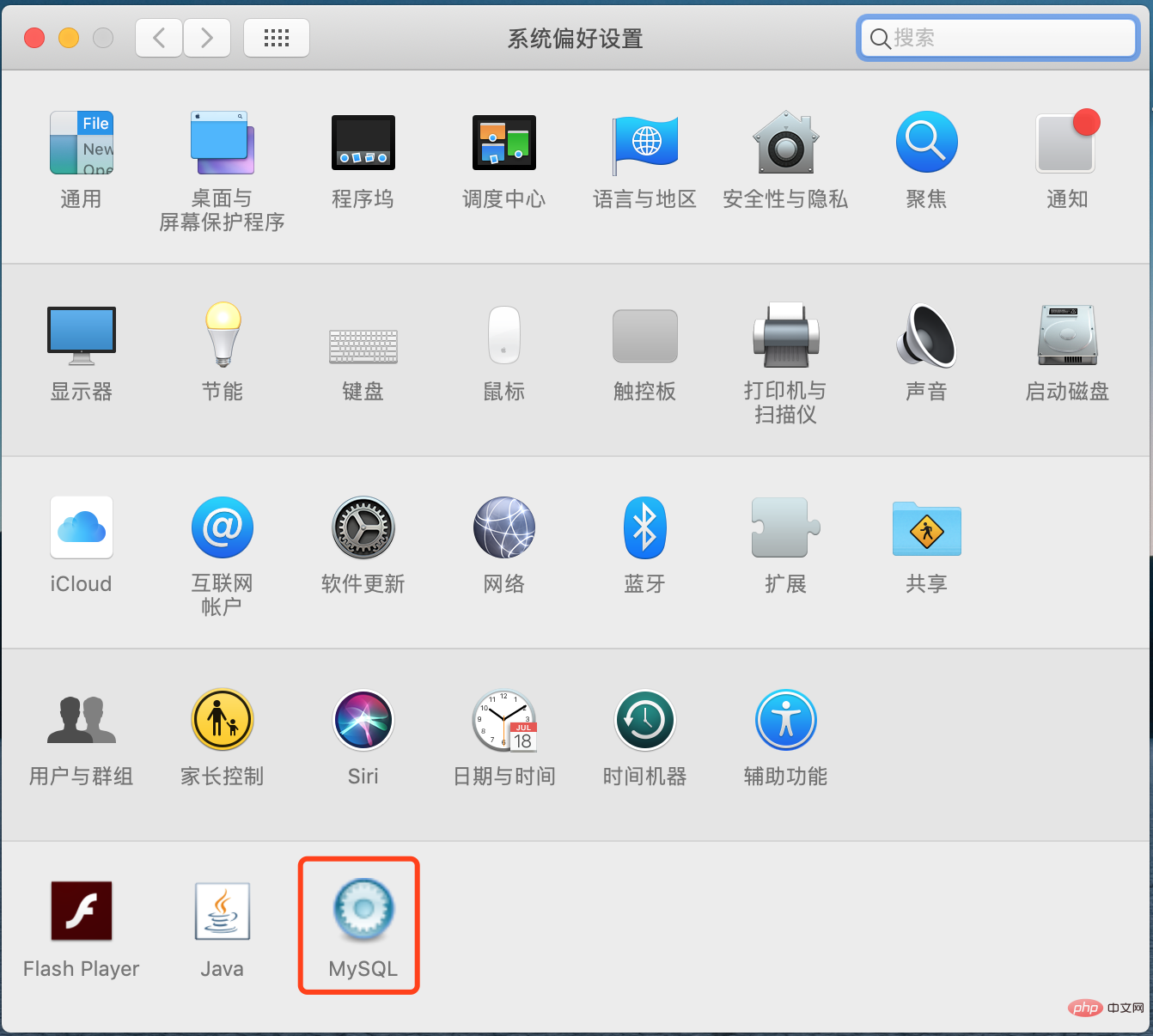
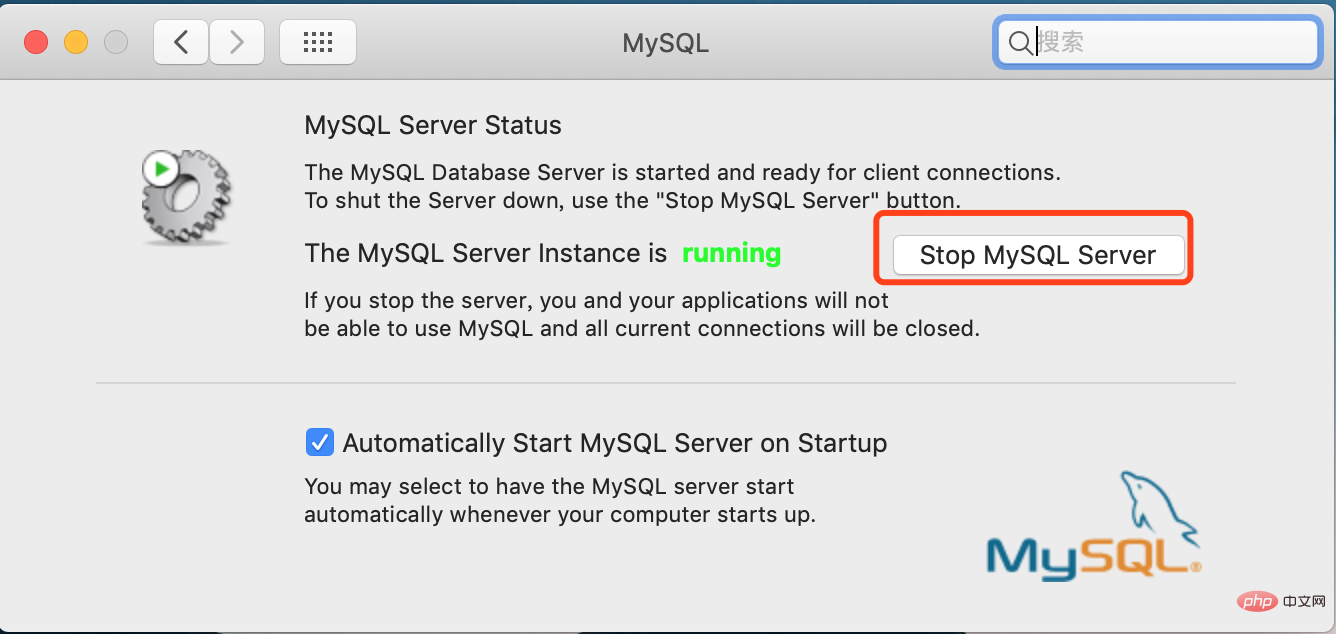
最后一步重启下mysql服务即可
推荐学习:《mysql视频教程》




