c库的内存分配函数void *realloc(void *ptr, size_t size) 尝试重新调整由ptr指向的先前使用malloc或calloc调用分配的内存块。
内存分配函数
内存可以通过以下两种方式进行分配:
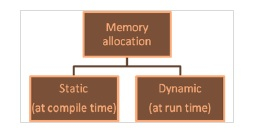
一旦在编译时分配了内存,就无法在执行期间更改。要么内存不足,要么内存浪费。
解决方案是动态创建内存,即根据程序在执行期间的需求。
立即学习“C语言免费学习笔记(深入)”;
用于动态内存管理的标准库函数如下:
- malloc ( )
- calloc ( )
- realloc ( )
- free ( )
realloc ( )函数
用于重新分配已经分配的内存。
可以减少或增加已分配的内存。
返回一个指向重新分配内存的基地址的void指针。
realloc()函数的语法如下:

Free void *realloc (pointer, newsize);
示例
以下示例展示了realloc()函数的用法。
int *ptr;
ptr = (int * ) malloc (1000);// we can use calloc also
- - -
- - -
- - -
ptr = (int * ) realloc (ptr, 500);
- - -
- - -
ptr = (int * ) realloc (ptr, 1500);
示例
下面是使用realloc()函数的C程序:
在线演示
#include<stdio.h>
#include<stdlib.h>
int main(){
   int *ptr, i, num;
   printf("array size is 5</p><p>");
   ptr = (int*)calloc(5, sizeof(int));
   if(ptr==NULL){
      printf("Memory allocation failed");
      exit(1); // exit the program
   }
   for(i = 0; i < 5; i++){
      printf("enter number at %d: ", i);
      scanf("%d", ptr+i);
   }
   printf("</p><p>Let's increase the array size to 7</p><p> ");
   ptr = (int*)realloc(ptr, 7 * sizeof(int));
   if(ptr==NULL){
      printf("Memory allocation failed");
      exit(1); // exit the program
   }
   printf("</p><p> enter 2 more integers</p><p></p><p>");
   for(i = 5; i < 7; i++){
      printf("Enter element number at %d: ", i);
      scanf("%d", ptr+i);
   }
   printf("</p><p> result array is: </p><p></p><p>");
   for(i = 0; i < 7; i++){
      printf("%d ", *(ptr+i) );
   }
   return 0;
}
输出
当上述程序被执行时,它产生以下结果 −
array size is 5
enter number at 0: 23
enter number at 1: 12
enter number at 2: 45
enter number at 3: 67
enter number at 4: 20
Let's increase the array size to 7
enter 2 more integers
Enter element number at 5: 90
Enter element number at 6: 60
result array is:
23 12 45 67 20 90 60