



.net框架中的linklist,实现的是双向链表,总结下它的实现源码。
先看下LinkedList提供的公有属性和方法的导图:
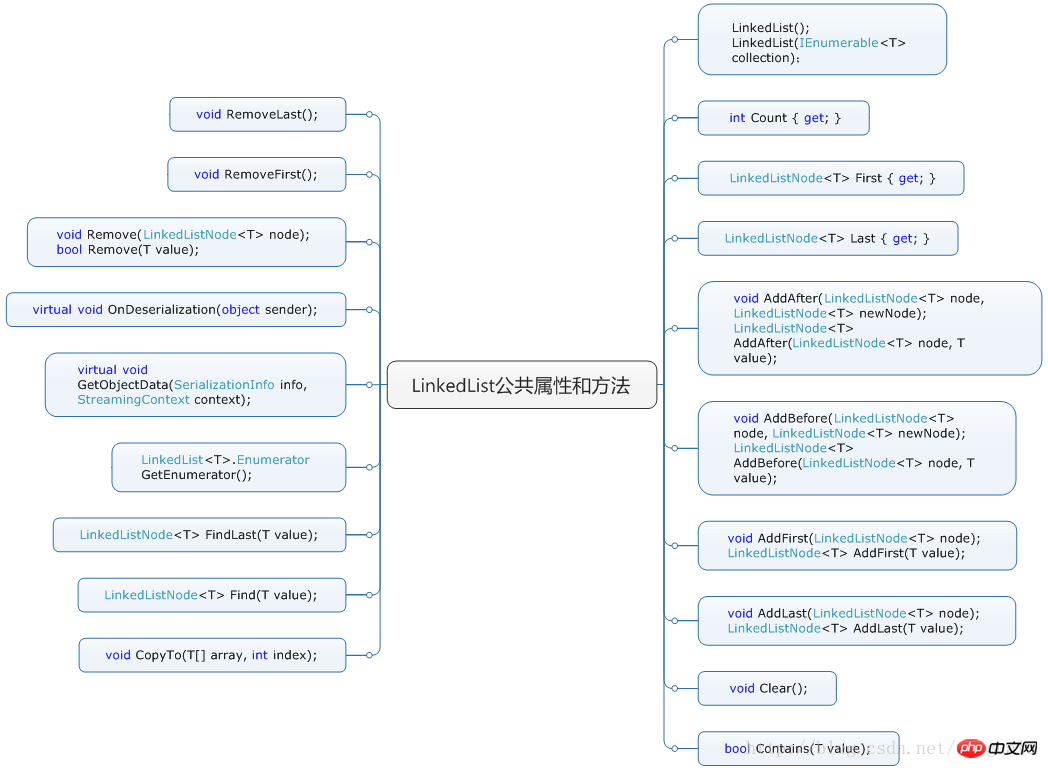
1 LinkedList实现的接口:
public class LinkedList: ICollection , ICollection, IReadOnlyCollection , ISerializable, IDeserializationCallback
2 LinkedList的全局变量包括,
head是封装的类内头节点;
        // This LinkedList is a doubly-Linked circular list.
        internal LinkedListNode head;
        internal int count;
        internal int version;
        private object _syncRoot;
        //A temporary variable which we need during deserialization.
        private SerializationInfo _siInfo;

        // names for serialization
        private const string VersionName = "Version";
        private const string CountName = "Count";
        private const string ValuesName = "Data";
封装的每个节点的数据结构为:
public sealed class LinkedListNode{ public LinkedListNode(T value); //获取LinkedListNode所属的LinkedList public LinkedList List { get; } public LinkedListNode Next { get; } public LinkedListNode Previous { get; } //获取节点中包含的值。 public T Value { get; set; } }
3 构造函数:
        public LinkedList() //默认的构造函数
        {
        }        //带有参数的
        public LinkedList(IEnumerable collection)
        {            if (collection == null)
            {                throw new ArgumentNullException(nameof(collection));
            }            foreach (T item in collection)
            {
                AddLast(item);
            }
} 在构造IEnumerable类型的collection时,用到了AddLast(T)方法,它还有一个重载,工作细节如下:
public LinkedListNodeAddLast(T value) { LinkedListNode result = new LinkedListNode (this, value); if (head == null) { InternalInsertNodeToEmptyList(result); } else { InternalInsertNodeBefore(head, result); } return result; } public void AddLast(LinkedListNode node) { ValidateNewNode(node); if (head == null) { InternalInsertNodeToEmptyList(node); } else { InternalInsertNodeBefore(head, node); } node.list = this; //结合LinkedListNode看 }
以上2个方法,语义是插入某个节点,
分插入新节点到空list中,InternalInsertNodeToEmptyList
插入新节点到不为空的list中,InternalInsertNodeBefore,并且给出在哪个节点前插入newNode,还判断了新插入的节点是不是一个有效的新节点。
internal void ValidateNewNode(LinkedListNodenode) { if (node == null) { throw new ArgumentNullException(nameof(node)); } if (node.list != null) { throw new InvalidOperationException(SR.LinkedListNodeIsAttached); } }
同时,还给出判断一个节点是不是有效节点:
internal void ValidateNode(LinkedListNodenode) { if (node == null) { throw new ArgumentNullException(nameof(node)); } if (node.list != this) { throw new InvalidOperationException(SR.ExternalLinkedListNode); } }
这是双向链表比较重要的内部方法,

InternalInsertNodeToEmptyList的实现细节:
private void InternalInsertNodeToEmptyList(LinkedListNodenewNode) { Debug.Assert(head == null && count == 0, "LinkedList must be empty when this method is called!"); newNode.next = newNode; newNode.prev = newNode; head = newNode; version++; count++; }
InternalInsertNodeBefore的实现细节:
private void InternalInsertNodeBefore(LinkedListNodenode, LinkedListNode newNode) { newNode.next = node; newNode.prev = node.prev; node.prev.next = newNode; node.prev = newNode; version++; count++; }
4 链表自然离不开插入某个节点的公有方法,
public LinkedListNodeAddAfter(LinkedListNode node, T value) { ValidateNode(node); LinkedListNode result = new LinkedListNode (node.list, value); InternalInsertNodeBefore(node.next, result); return result; } public void AddAfter(LinkedListNode node, LinkedListNode newNode) { ValidateNode(node); ValidateNewNode(newNode); InternalInsertNodeBefore(node.next, newNode); newNode.list = this; } public LinkedListNode AddBefore(LinkedListNode node, T value) { ValidateNode(node); LinkedListNode result = new LinkedListNode (node.list, value); InternalInsertNodeBefore(node, result); if (node == head) { head = result; } return result; } public void AddBefore(LinkedListNode node, LinkedListNode newNode) { ValidateNode(node); ValidateNewNode(newNode); InternalInsertNodeBefore(node, newNode); newNode.list = this; if (node == head) { head = newNode; } } public LinkedListNode AddFirst(T value) { LinkedListNode result = new LinkedListNode (this, value); if (head == null) { InternalInsertNodeToEmptyList(result); } else { InternalInsertNodeBefore(head, result); head = result; } return result; } public void AddFirst(LinkedListNode node) { ValidateNewNode(node); if (head == null) { InternalInsertNodeToEmptyList(node); } else { InternalInsertNodeBefore(head, node); head = node; } node.list = this; } public LinkedListNode AddLast(T value) { LinkedListNode result = new LinkedListNode (this, value); if (head == null) { InternalInsertNodeToEmptyList(result); } else { InternalInsertNodeBefore(head, result); } return result; } public void AddLast(LinkedListNode node) { ValidateNewNode(node); if (head == null) { InternalInsertNodeToEmptyList(node); } else { InternalInsertNodeBefore(head, node); } node.list = this; }
5 再看下,清除链表所有节点,此处是设置所有节点不在指向内存堆,然后等GC回收,
        public void Clear()
        {
            LinkedListNode current = head;
            while (current != null)
            {
                LinkedListNode temp = current;
                current = current.Next;
                // use Next the instead of "next", otherwise it will loop forever
                temp.Invalidate();
            }

            head = null;
            count = 0;
            version++;
        }
6 与只相对应的是移除某个节点的一些列接口,与添加类似,不再赘述,
Clear里面调用了Invalidate(),实现很简单:
        internal void Invalidate()
        {
            list = null;
            next = null;
            prev = null;
        }
7 判断某个节点值为value的存在性,里面调用Find方法,
        public bool Contains(T value)
        {            return Find(value) != null;
}Find方法实现细节,类似的API还有FindLast,因为是双向链表,所以从尾部开始遍历链表即可,
public LinkedListNodeFind(T value) { LinkedListNode node = head; //调用默认相等比较器 EqualityComparer c = EqualityComparer .Default; if (node != null)//链表为null { if (value != null) { do { if (c.Equals(node.item, value)) //Equals:某个节点node的item与value相等 { return node; } node = node.next; } while (node != head); } else { do { if (node.item == null) { return node; } node = node.next; } while (node != head); } } return null; //链表为null,直接返回null }
8 再看一个复制数据到数组的实现:
        public void CopyTo(T[] array, int index)
        {
        if (array == null)
            {
            throw new ArgumentNullException(nameof(array));
            }
            if (index < 0)
            {
            throw new ArgumentOutOfRangeException(nameof(index), index, SR.ArgumentOutOfRange_NeedNonNegNum);
            }
            if (index > array.Length)
            {
            throw new ArgumentOutOfRangeException(nameof(index), index, SR.ArgumentOutOfRange_BiggerThanCollection);
            }
            if (array.Length - index < Count)
            {
            throw new ArgumentException(SR.Arg_InsufficientSpace);
            }

            LinkedListNode node = head;
            if (node != null)
            {
                do
                {
                    array[index++] = node.item;
                    node = node.next;
                } while (node != head); //双向链表,再次遍历到头结点时
            }
} 




