



使用ofstream和流操作符是C++中格式化写入文件最自然且类型安全的方法,通过std::ofstream打开文件后可用

在C++中写入格式化文本到文件,常用的方法是结合
std::ofstream和
<<操作符,或者使用
sprintf/
snprintf配合字符串处理。下面介绍几种实用且清晰的方式。
使用ofstream和流操作符
这是最自然、类型安全的方式。通过
std::ofstream打开文件,然后像使用
std::cout一样写入内容。
#include#include #include int main() { std::ofstream file("output.txt"); if (!file.is_open()) { std::cerr << "无法打开文件!" << std::endl; return 1; } std::string name = "Alice"; int age = 25; double score = 95.6; file << "姓名: " << name << "\n"; file << "年龄: " << age << "\n"; file << "成绩: " << score << "\n"; file.close(); return 0; }
这种方式自动处理类型转换,代码清晰,推荐日常使用。
控制浮点数精度等格式
如果需要控制输出格式,比如保留两位小数,可以用
中的操作符。
立即学习“C++免费学习笔记(深入)”;
#include#include std::ofstream file("report.txt"); file << std::fixed << std::setprecision(2); file << "总价: " << 123.456 << std::endl; // 输出 123.46
std::fixed 和 std::setprecision 能精确控制浮点数显示方式,适合生成报表类文本。
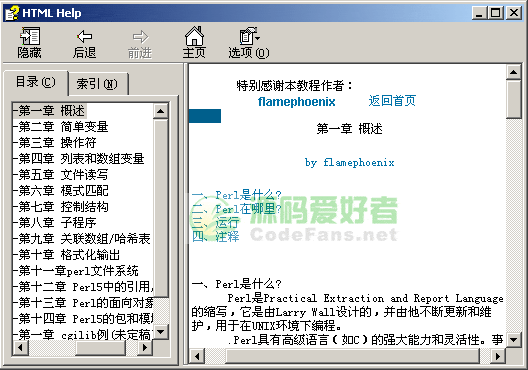
Perl 基础教程 chm
下载
Perl 基础入门中文教程,chm格式,讲述PERL概述、简单变量、操作符、列表和数组变量、文件读写、模式匹配、控制结构、子程序、关联数组/哈希表、格式化输出、文件系统、引用、面向对象、包和模块等知识点。适合初学者阅读和了解Perl脚本语言。
使用sprintf构造格式化字符串再写入
当你习惯C风格的
printf格式时,可以先用
snprintf格式化字符串,再写入文件。
#include#include #include char buffer[256]; std::ofstream file("log.txt"); int value = 42; double pi = 3.1415926; std::snprintf(buffer, sizeof(buffer), "数值: %d, Pi ≈ %.3f", value, pi); file << buffer << std::endl;
这种方法灵活,适合复杂格式,但要注意缓冲区大小,避免溢出。
组合变量与模板化输出
对于重复的格式输出,可以封装成函数,提高复用性。
void writePerson(std::ofstream& file, const std::string& name, int age, double height) {
    file << "名称:" << std::left << std::setw(10) << name
         << " 年龄:" << std::setw(3) << age
         << " 身高:" << std::fixed << std::setprecision(2) << height << "m\n";
}
配合
std::setw还能实现对齐效果,适合生成整齐的日志或表格文本。
基本上就这些。选择哪种方式取决于你的格式需求和编码风格。流操作安全直观,C风格格式灵活高效。根据场景选就好。




